
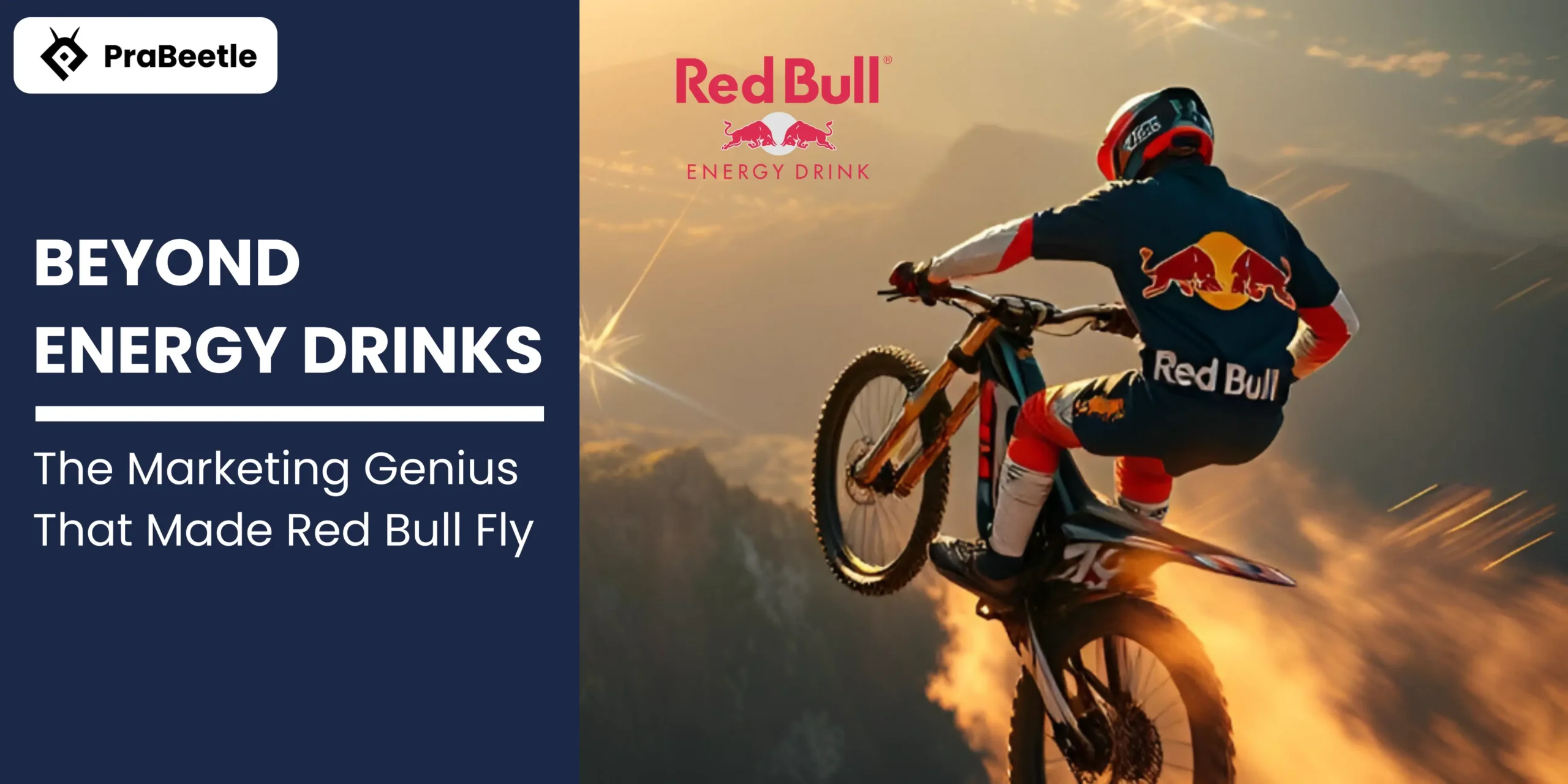
Introduction: Since 1994 to World Phenomenon
Red Bull is not merely an energy beverage, but a trend sweeping the globe, which has changed the marketing industry. Since the activities are sponsored by adrenaline producing events, to constructing one of the most recognizable brands around the globe, Red Bull has turned a simple refreshment into a lifestyle.
The brand was founded in the middle 1980s, it did not merely sell energy but a sense of possibility, and pushing boundaries and living to the fullest. The current sales data on Red Bull are over 11 billion cans that are being sold in 170 + countries every year.
But this did not come by chance. It has been constructed on positive marketing ideas that have merged advertising, entertainment and experience. The story of Red bull also presents an ideal case study to the marketing students on how to make a product a global cultural icon.
Birth of Red Bull: Cultural Adaptation Case
Red Bull history trace back to 1984 when Dietrich Mateschitz, an Austrian marketer made a partnership agreement with Chaleo, a Thai businessman that gave rise to a power tonic by the name Krating Daeng.
On one of the business trips in Thailand, around the beginning of 1980s, Mateschitz was introduced to the beverage. He understood what it could become and worked with Chaleo on adjusting the formula and branding to suit the western markets. Thus, Red Bull was born in 1987.
It is also one of the first attempts at adapting a product across cultures one of the main marketing principles. Red bull has not merely adapted the Thai brand it has reinvented it. The brand name, the logo consisting of the two bulls running against each other, and the slogan Red Bull Gives You Wings developed a brand identity around the world.
To the marketing students, this phase demonstrates the strength of localization and cultural acumen in developing an overseas creation.
The Knowledge of the Core Marketing Philosophy of Red Bull
The very core of the Red Bull marketing philosophy is the following idea:
“Our mission is not to be an energy drink company, it is to be a media company that sells energy drinks.”
The whole strategy of Red Bull is experience based and not product based. The company never promotes ingredients or taste. Instead, it encourages the sense of adventure, courage and creativity – values the audience can have an emotional connection with.
The philosophy of the brand is based on four pillars
-
- Lifestyle marketing – Identifying the drink with a high activity, fearless lifestyle.
-
- Authenticity – Empowering actual athletes, creators, and communities.
-
- Creation of content – Stories that sell and not tell.
-
- Experience marketing – Making each event or campaign a memorable experience.
This kind of mentality enabled Red Bull to transform into a lifestyle icon, a place that not many other competitors have managed to match.
Brand Positioning and Target Market
The primary target market of Red Bull consists of young adults between 18 and 34 between students and professionals or athletes in need of high-performance and excitement.
These consumers are psychographically adventurous, independent, and adventurous in nature. They are driven by the difficulties and lead hectic lives.
Brand positioning statement by Red Bull can be in the form of:
Red Bull the energy drink that lets you fly has been adopted by people who strive to stretch their limits and gives them the stamina to do the impossible both physically and emotionally.
This brand does not differentiate itself inherited by its product features but because the brand possesses an emotional territory, the thrill of high performance. It is the psychological positioning that makes Red Bull more of a movement than a drink.
Red Bull Marketing Mix (4Ps)
1. Product
Red Bull has standardized its formula in all countries of the world; a tiny 250ml can of energy and concentration. Even the design is iconic; it is smooth, metallic and minimalistic in nature, and representing the modernity and speed. The brand then continued to introduce other flavors such as sugar free and flavor but continued to be known as premium.
2. Price
Red Bull adheres to a high-price industry. Though it is a smaller soft drink when compared to the majority of beverages, it is priced at a higher rate giving it an image of being exclusive and more valuable. It is a great example of the psychological pricing, which supports the notion that the quality energy is a premium price.
3. Place
The product has been sold in more than 170 countries sold by stores located in convenience, supermarkets, clubs and vending machines. Red Bull has been advertising its cans strategic places, where the youths move a great deal such as universities, gyms, night clubs and athletic arenas.
4. Promotion
Red Bull is in its full element in promotion. The company spends a lot of money sponsoring, branded events and online storytelling. In contrast to the conventional advertisements, Red Bull concentrates on the experience that is able to depict its adventurous character.
Advertising and Promotion Strategy: Selling a Lifestyle
Rather than competing in the traditional TV or print advertisements, Red Bull developed its own storytelling ecosystem.
Commercials of the brand are very brief, humorous and they end with the tag line “Red Bull Gives you Wings.” But it is the real marketing magic that is performed when it goes out of the conventional channels.
Key promotional strategies
-
- Event marketing activities: Red Bull organizes and sponsors extreme sports including Red Bull Rampage and Red Bull Air Race.
-
- Sports teams: Formula 1 teams (Red Bull Racing, AlphaTauri) and football teams (RB Leipzig, New York Red Bulls).
-
- Campus marketing: Distribution of free cans in the campuses in order to boost the word-of-mouth.
-
- Guerrilla marketing: Dropping lonely cans at nightclubs to make them look popular — a typical example of social proof.
Such unusual approaches made Red Bull look like a lifestyle brand that people desire to identify with instead of drink.

Event Marketing and Extreme Sports
There is no brand that conducts event marketing in the same way as Red Bull. They do not merely sponsor events, but are known to invent them.
Examples include:
-
- Redbull Stratos (2012): When Felix Baumgartner leaped off the rim of space, 8 million individuals looked on live on YouTube.
-
- Red Bull Cliff Diving Series: Athletes leaping off the cliffs and into the ocean — an ideal expression of fearlessness.
-
- Red Bull Rampage: A mountain biking event that has characterized extreme sports culture.
Such events create tremendous media coverage, viral content and emotional connection. They also give real content to the digital platforms of Red Bull.
Marketing students can get into this that establishing long-term brand equity is achieved much better when you own your media moments as opposed to when you are renting advertising space.
Red Bull Media House Content Marketing
In 2007, Red Bull was among the first brands to come out with its own media company of its own — Red Bull Media House.
It creates thousands of videos, documentaries, magazines, podcasts sharing awe-inspiring stories of athletes, adventurers, and creators.
It has some flagship productions such as:
-
- The Art of Flight (snowboarding documentary)
-
- Red Bull TV – an online free streaming platform
-
- The Red Bulletin – lifestyle magazine of the brand
Even using this media empire Red Bull managed to make content marketing something of entertainment, at the same time, it managed to strengthen its brand values.
The moral of the story: It is better not to advertise, build culture.

Digital and Social Media Strategy
The digital strategy developed by Red Bull is among the most enviable in marketing. The brand uses all the significant social media to enhance the energy and excitement message.
YouTube
The number of people subscribing to YouTube channel of Red Bull stands at more than 10 million including extreme sports, behind the scenes video, and documentaries. Their videos are geared towards storytelling as opposed to sales.
Instagram & TikTok
They provide clips, athlete takeovers, and user-created challenges that are in the short and high-energy format. All the posts are based on the same brand DNA: action, creativity, authenticity.
Website and Apps
The official site is used as a media site and community board. On each page, the brand story, which is full of images, motivational text, and invitations to adventure, is strengthened.
Red Bull created active participants of the brand and not consumers through social media.
Marketing Red Bull Psychological Triggers
The marketing of Red Bull is an art lesson on how to use behavior psychology of influencing consumer behavior.
Their major causes of triggering include:
-
- Brevity and selectivity: High prices and limited number will make the beverage special.
-
- Social evidence: Sponsorships and influential collaboration demonstrates actual individuals who use the product.
-
- Aspirational identity: Purchasing Red Bull implies the purchase of the attitude of success and daring.
-
- Consistency: “Gives You Wings” slogan has remained the same all along, construction of long term memory.
-
- Emotional appeal: Each item of the content is exciting, pride-inducing, and inspirational.
As a marketing student, these psychological levers should be understood so as to be able to develop effective campaigns.
Brand Consistency and Global Localization
Red Bull has a uniform international image that is the can, the logo, the colors, and the slogan, but the campaigns are customized at the local level.
For example:
-
- In Japan, it was pre-occupied with productivity and mental concentration.
-
- In Brazil, it collaborated with music and dance festivals in the country.
-
- In India, it joined college cultural fests and liaised with cricket events.
This has been called globalization, but it means acting like a global citizen and thinking like a local. It enables Red Bull to remain relevant with a powerful global identity.
Competition and Response on the Market
Other players in the market such as Monster, Rockstar, and Gatorade have also attempted to take the lead above Red Bull but few have managed to follow suit.
Red Bull focuses on culture and emotion when others base their strategies on ingredients and performance.
The new health-conscious brands are also coming into the market but Red Bull is still reigning supreme due to brand loyalty and authenticity.
