
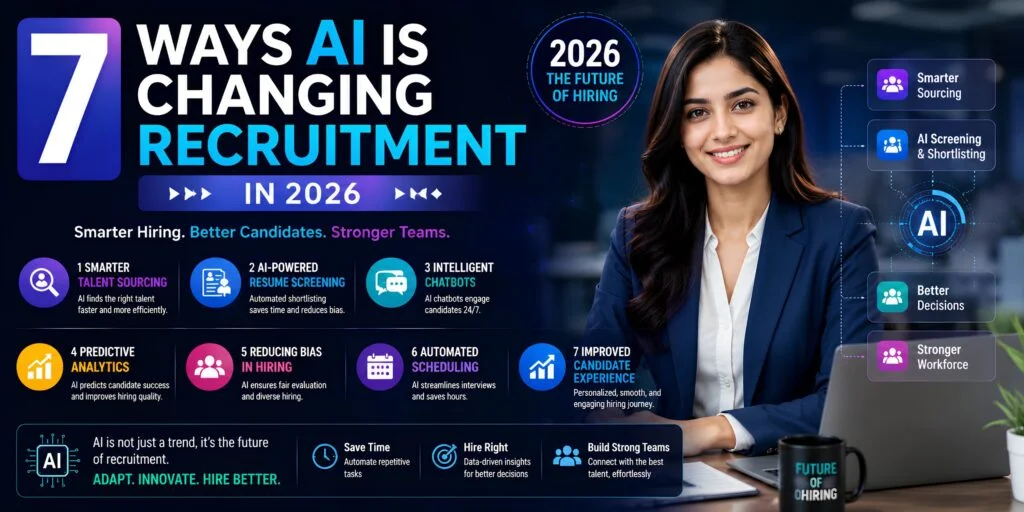
Companies around the world are already using artificial intelligence to accelerate hiring and improve candidate experiences. However, many organizations still underestimate how deeply AI is transforming recruitment in 2026. In this guide, you’ll discover seven major ways AI is reshaping hiring, the tools driving this change, and how businesses can prepare for the future.
What Is AI Recruitment and How Does It Work?
AI recruitment is the use of artificial intelligence technologies to automate and optimize hiring processes. It combines machine learning, predictive analytics, and natural language processing to simplify talent acquisition and improve decision-making.
Traditional recruitment often involves reviewing hundreds of resumes, coordinating interviews, and communicating with candidates manually. These repetitive tasks consume considerable time and resources. AI tools streamline these activities, enabling recruiters to focus more on strategic decisions and building relationships with candidates.
Modern recruitment platforms use intelligent algorithms to identify patterns and recommend suitable applicants. This approach improves hiring speed and helps companies find better talent while reducing administrative burdens.
Why AI Recruitment Matters in 2026
AI recruitment has become increasingly important because organizations are competing aggressively for top talent. Businesses need faster hiring cycles, improved candidate experiences, and lower recruitment costs to remain competitive.
Artificial intelligence helps recruiters process large volumes of applications and deliver quicker responses to candidates. This not only increases efficiency but also strengthens employer branding. Companies adopting AI technologies are often able to reduce time-to-hire and improve overall recruitment quality.
Human expertise remains essential despite these technological advancements. AI supports recruiters rather than replacing them, allowing professionals to spend more time evaluating cultural fit and long-term potential.
1. AI-Powered Resume Screening Improves Hiring Speed
AI-powered resume screening involves analyzing candidate applications using algorithms to identify the most relevant applicants. Instead of manually reviewing hundreds of resumes, recruiters can quickly shortlist qualified candidates based on experience, skills, and job requirements.
This technology reduces repetitive work and enables HR teams to focus on interviewing and candidate engagement. Intelligent screening systems can also minimize the chances of overlooking highly qualified applicants.
As organizations continue receiving larger volumes of applications, AI-powered screening tools are becoming essential for maintaining efficiency and ensuring faster hiring processes.
2. AI Candidate Matching Helps Recruiters Find Better Talent
AI candidate matching uses machine learning to connect job requirements with suitable applicants. These systems evaluate skills, certifications, experience, and behavioral patterns to recommend the most relevant candidates.
Traditional keyword searches often miss strong applicants. AI-driven talent matching provides deeper insights and uncovers hidden opportunities, resulting in improved hiring outcomes.
Better candidate matching can also reduce employee turnover because organizations are more likely to hire individuals who align with job expectations and company requirements.
3. AI Chatbots Enhance Candidate Engagement
AI chatbots provide continuous communication throughout the hiring process. Candidates can receive instant responses to common questions, application updates, and interview reminders without waiting for manual replies.
Poor communication often causes candidates to abandon applications. AI chatbots solve this challenge by maintaining engagement and ensuring applicants remain informed during every stage of recruitment.
Organizations using conversational AI frequently report higher application completion rates and improved candidate satisfaction. These tools help recruiters deliver exceptional experiences while reducing workloads.
4. Predictive Analytics Creates Smarter Hiring Decisions
Predictive hiring analytics uses historical and behavioral data to forecast candidate success and improve recruitment decisions. Instead of relying solely on intuition, recruiters can make decisions based on measurable insights.
These systems help organizations identify high-performing candidates and predict retention rates. Companies can therefore reduce hiring risks and improve workforce planning.
Data-driven recruitment is becoming increasingly valuable because it enables businesses to make informed decisions that support long-term growth and employee success.
5. Automated Interview Scheduling Saves Time
Scheduling interviews manually can become complicated when multiple candidates and stakeholders are involved. AI-powered scheduling tools simplify this process by automatically coordinating calendars and sending reminders.
This automation improves efficiency and reduces delays in the hiring process. Candidates receive interview invitations faster, creating a smoother and more professional experience.
By eliminating administrative tasks, recruiters gain more time to focus on candidate evaluation and strategic hiring activities.
6. AI-Based Skill Assessments Increase Hiring Accuracy
AI-driven assessments help organizations evaluate technical skills, communication abilities, and job-specific competencies objectively. These assessments provide valuable insights that complement interviews and resume reviews.
Companies increasingly rely on skill-based hiring because demonstrated abilities often predict performance more accurately than resumes alone. AI platforms provide standardized evaluations that improve fairness and consistency.
As competition for talent increases, skill assessments are becoming a critical component of modern recruitment strategies.
7. Personalized Candidate Experiences Strengthen Employer Branding
Candidates expect personalized interactions throughout the hiring journey. AI tools analyze preferences and behavior to deliver customized communication, recommendations, and timely updates.
Personalized experiences improve engagement and encourage candidates to maintain interest in job opportunities. Positive interactions also strengthen employer branding and increase offer acceptance rates.
Organizations that prioritize candidate experiences often gain a competitive advantage when attracting top talent.
Popular AI Recruitment Tools in 2026
Several AI-powered recruitment platforms are transforming hiring processes across industries. Tools such as LinkedIn Recruiter AI, Workday, Greenhouse, Eightfold AI, and HireVue help organizations streamline talent acquisition and improve efficiency.
Businesses should select tools based on hiring requirements, company size, and budget. Combining AI technologies with human expertise creates a balanced recruitment strategy that maximizes results.
Will AI Replace Human Recruiters?
AI will not replace human recruiters because hiring involves emotional intelligence, relationship building, and cultural assessments that machines cannot replicate completely.
Artificial intelligence acts as an assistant rather than a substitute. Recruiters who embrace AI technologies can become more productive and focus on strategic responsibilities that require human judgment.
The future of recruitment depends on collaboration between intelligent systems and experienced professionals.
Conclusion
Artificial intelligence is transforming recruitment faster than ever before. From resume screening and talent matching to predictive analytics and personalized experiences, AI is helping organizations hire smarter and faster.
However, successful recruitment still depends on human expertise and ethical decision-making. Businesses that combine AI capabilities with human judgment will be better positioned to attract and retain top talent in 2026 and beyond.