
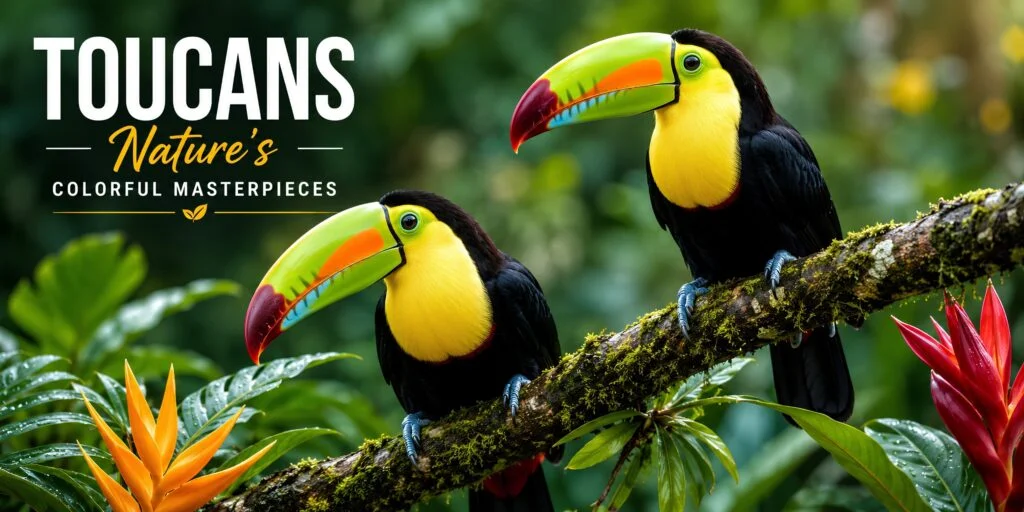
You’ve probably seen toucans in cartoons, rainforest documentaries, or colorful tropical photos with their oversized beaks and bright feathers. But many people still do not understand how important these birds are to rainforest ecosystems or how unique their behavior actually is. In this guide, you’ll learn everything about toucans bird species, including their habitat, diet, behavior, conservation, and pet ownership facts.
Key Takeaways
- Toucans are tropical rainforest birds famous for their colorful oversized beaks.
- Toucan species belong to the Ramphastidae bird family found in Central and South America.
- Toucans mainly eat fruit, but they may also consume insects, eggs, and small animals.
- Toucan birds are not birds of prey because they do not hunt like hawks or eagles.
- Toucans help rainforests by spreading seeds naturally across forest areas.
- Habitat destruction and illegal wildlife trade threaten toucan populations.
- Toucan ownership requires special care, legal permission, and ethical responsibility.
What Are Toucans Birds?
Toucans are tropical birds belonging to the Ramphastidae family native to Central and South American rainforests. These birds are best known for their large colorful beaks, lightweight bodies, and bright feathers. Scientists recognize more than 40 species of toucans, toucanets, and aracaris.
First, toucans are tree-dwelling birds that spend most of their lives in rainforest canopies. For example, they move between branches searching for fruit, insects, and nesting areas. Their unique feet help them grip branches securely while climbing.
Moreover, toucans are related to woodpeckers rather than parrots. Many people confuse them with parrots because both groups are colorful tropical birds. However, scientists classify toucans differently based on anatomy and genetics.
The large colorful beak of a toucan helps regulate body temperature and access fruit on tree branches. Research published in Nature Journal showed that toucan beaks contain blood vessels that release excess heat — Source: Nature Journal, 2009.
What Family Do Toucans Belong To?
Toucans belong to the Ramphastidae bird family. This family includes toucans, toucanets, and aracaris. These birds share similar physical features like curved colorful beaks and zygodactyl feet.
Additionally, toucans belong to the Piciformes order, which also includes woodpeckers and barbets. Their feet contain two toes pointing forward and two backward, allowing stronger grip on branches.
For example, the famous Toco Toucan is the largest species in the Ramphastidae family and can reach over 25 inches long.
Why Do Toucans Matter in Nature?
Toucans matter in nature because they help maintain rainforest biodiversity through seed dispersal. These birds spread seeds naturally after eating fruit, helping forests regenerate across large areas.
First, toucans consume many rainforest fruits daily. After digestion, seeds are dropped in different locations where new plants can grow. This process supports healthy rainforest ecosystems.
For example, scientists observed toucans dispersing seeds across several kilometers in Amazon forests. This natural movement improves plant diversity and forest recovery.
Deforestation is one of the biggest threats to toucan populations and their rainforest habitats. Rainforest destruction removes food supplies and nesting spaces for these birds.
Statistic: Around 17% of the Amazon rainforest has already been lost due to deforestation — Source: Amazon Conservation Association, 2023.
“importance of biodiversity in rainforests“
How Toucans Support Rainforest Ecosystems
Toucan birds act as natural forest gardeners. Their feeding habits help distribute seeds from fruit-bearing trees throughout the rainforest.
Additionally, toucans support ecological balance by interacting with insects and small animals. Empty toucan nests may later become homes for bats, owls, or reptiles.
For example, many tropical trees depend heavily on birds like toucans for seed distribution.
What Are the Main Types of Toucans?
Toucan species vary in color, size, habitat, and beak shape across tropical regions. Some species have rainbow-colored bills, while others feature darker plumage and smaller bodies.
| Toucan Species | Habitat | Main Feature | Average Size |
| Toco Toucan | Brazil and Bolivia | Giant orange beak | 22–25 inches |
| Keel-Billed Toucan | Central America | Rainbow-colored bill | 17–20 inches |
| Channel-Billed Toucan | South America | Loud vocal sounds | 19–24 inches |
| Emerald Toucanet | Mountain forests | Small green feathers | 12–14 inches |
Toco Toucan
The toco toucan is the largest and most recognizable toucan species. It has a massive orange beak with black markings and bright white throat feathers.
Moreover, the toco toucan appears frequently in advertisements, cartoons, and wildlife documentaries because of its dramatic appearance.
Keel-Billed Toucan
The keel-billed toucan is famous for its rainbow-colored beak and tropical beauty. This species lives mainly in Belize, Costa Rica, and nearby rainforest regions.
Additionally, the keel-billed toucan is often called one of the most beautiful birds in Central America.

Where Do Toucans Live in the Wild?
Toucans live in tropical rainforests across Central and South America. Their natural range extends from southern Mexico to Brazil and northern Argentina.
First, toucans prefer humid forests with dense tree coverage. These habitats provide fruits, insects, and nesting cavities throughout the year.
For example, the Amazon rainforest contains ideal conditions for toucan survival because of its biodiversity and year-round vegetation.
Toucan rainforest birds depend heavily on forest canopies for protection and feeding. Most species rarely spend time on the ground because predators are more dangerous there.
Statistic: The Amazon rainforest contains over 390 billion individual trees — Source: World Wildlife Fund, 2024.
“rainforest animals and their habitats“
How Toucans Build Nests
Toucans nest inside natural tree cavities. Unlike woodpeckers, they usually reuse existing holes instead of carving new ones.
Additionally, toucan parents care for chicks together. Young toucans hatch blind and featherless before developing colorful adult features.
How Toucans Adapt to Tropical Climates
Toucan birds adapt to tropical climates using specialized beaks and lightweight bodies. Their beaks help regulate heat during hot rainforest afternoons.
For example, thermal imaging studies showed toucan beaks functioning like natural cooling systems.”how birds adapt to tropical climates“
What Do Toucans Eat in Their Natural Habitat?
Toucans primarily eat fruit, but some species may also consume insects, eggs, and small animals. Their feeding behavior makes them omnivorous rainforest birds.
First, fruit forms most of a toucan’s diet. Common foods include figs, berries, bananas, and tropical fruits.
For example, toucans use their long beaks to reach fruit on branches too thin to support their body weight.
Do Toucans Eat Birds or Eggs?
Some toucans occasionally eat bird eggs and small nestlings. However, they are not active hunters like birds of prey.
Moreover, toucans may consume frogs, insects, or lizards when fruit becomes scarce during certain seasons.
Toucans are not birds of prey because they do not hunt animals in the same way raptors do. Raptors rely on talons and aggressive hunting techniques, while toucans mainly forage for fruit.
Statistic: Fruit makes up around 60–90% of most toucan diets — Source: Smithsonian Tropical Research Institute, 2024.
How Toucans Feed in Rainforests
Toucan feeding behavior involves tossing food into the throat before swallowing. Their large beaks are useful for grabbing food but not chewing.
Additionally, toucans often travel in small groups while searching for feeding areas. This behavior improves protection against predators.

Are Toucans Birds of Prey or Omnivores?
Toucans are omnivorous rainforest birds rather than birds of prey. Although they occasionally eat eggs or insects, fruit remains their primary food source.
First, birds of prey include hawks, eagles, falcons, and owls. These birds actively hunt using strong talons and sharp vision.
For example, toucans lack the curved claws and hunting behavior associated with raptors.
Are Toucans Similar to Parrots?
Toucans and parrots look similar but belong to different bird families. Parrots belong to the Psittacidae family, while toucans belong to Ramphastidae.
Additionally, parrots use stronger curved beaks for cracking seeds and nuts, while toucans use lighter elongated beaks for reaching fruit.
“interesting facts about parrots“
Which Birds Look Similar to Toucans?
Several tropical birds resemble toucans because of their colorful appearance and large beaks. Common examples include hornbills, aracaris, and some birds of paradise.
Moreover, hornbills from Africa and Asia share the closest visual resemblance to toucans.
Can You Own a Toucan as a Pet Legally?
Toucan ownership is legal in some countries but restricted in many regions. Exotic bird laws vary depending on wildlife protection regulations.
First, toucans require specialized diets, climate-controlled spaces, and large enclosures. They are not beginner-friendly pets.
For example, toucans need fresh fruit daily and regular enrichment activities to stay healthy in captivity.
How Much Does a Toucan Bird Cost?
Toucan bird prices generally range from $5,000 to $15,000 depending on species and legality. Rare species may cost significantly more.
Additionally, ongoing expenses include veterinary care, large cages, heating systems, and dietary maintenance.
Statistic: Exotic bird veterinary visits may exceed $500 per treatment session — Source: Association of Avian Veterinarians, 2024.
Ethical Concerns About Toucan Ownership
Ethical toucan ownership requires understanding conservation and animal welfare concerns. Many experts discourage private ownership because toucans struggle outside natural habitats.
Moreover, illegal wildlife trade contributes to declining bird populations and rainforest exploitation.

What Tools and Resources Help You Learn About Toucans?
Toucan learning resources include wildlife photography websites, birdwatching apps, and drawing tutorials. These tools help students, artists, and wildlife enthusiasts study tropical birds effectively.
Best Toucan Drawing References
Toucan bird drawing references help artists understand beak shape, posture, and feather texture. Wildlife sketching also improves observation skills.
For example, digital art platforms and educational tutorials provide step-by-step toucan drawing exercises.
“easy bird drawing tutorials“
Wildlife Photography and Birdwatching Apps
Wildlife photography tools improve toucan observation and rainforest education. Cameras with zoom lenses allow photographers to capture birds without disturbing them.
Additionally, apps like Merlin Bird ID and eBird help identify tropical bird species quickly.
What Is the Future of Toucan Conservation?
Toucan conservation focuses on protecting rainforest habitats and reducing illegal wildlife trade. Conservation programs aim to preserve biodiversity across tropical regions.
First, habitat destruction remains the biggest threat to toucans. Logging, mining, and agriculture continue removing rainforest ecosystems.
For example, many toucan nesting trees disappear because of commercial deforestation.
How Conservation Groups Protect Toucans
Wildlife organizations protect toucans through habitat restoration and education programs. Protected rainforest reserves help preserve breeding and feeding areas.
Additionally, ecotourism programs support local economies while encouraging rainforest conservation.
Statistic: The Amazon rainforest stores around 123 billion tons of carbon — Source: World Resources Institute, 2024.
How You Can Help Protect Toucan Birds
Everyday conservation choices can indirectly support toucan survival. Supporting rainforest-friendly products and wildlife charities helps reduce environmental damage.
Moreover, responsible tourism and ethical wildlife photography increase awareness without harming animals.
“facts about tropical birds“
Conclusion
Toucans are extraordinary tropical birds that play an important role in rainforest ecosystems. Their colorful beaks, unique feeding habits, and ecological contributions make them one of the most fascinating bird families in the world.
Moreover, toucans help forests regenerate naturally through seed dispersal and biodiversity support. Although they occasionally eat insects or eggs, they are not birds of prey and remain primarily fruit-eating rainforest birds.
As deforestation continues to threaten tropical habitats, conservation becomes increasingly important. By learning more about toucans and supporting rainforest protection, you can help preserve these amazing birds for future generations.