
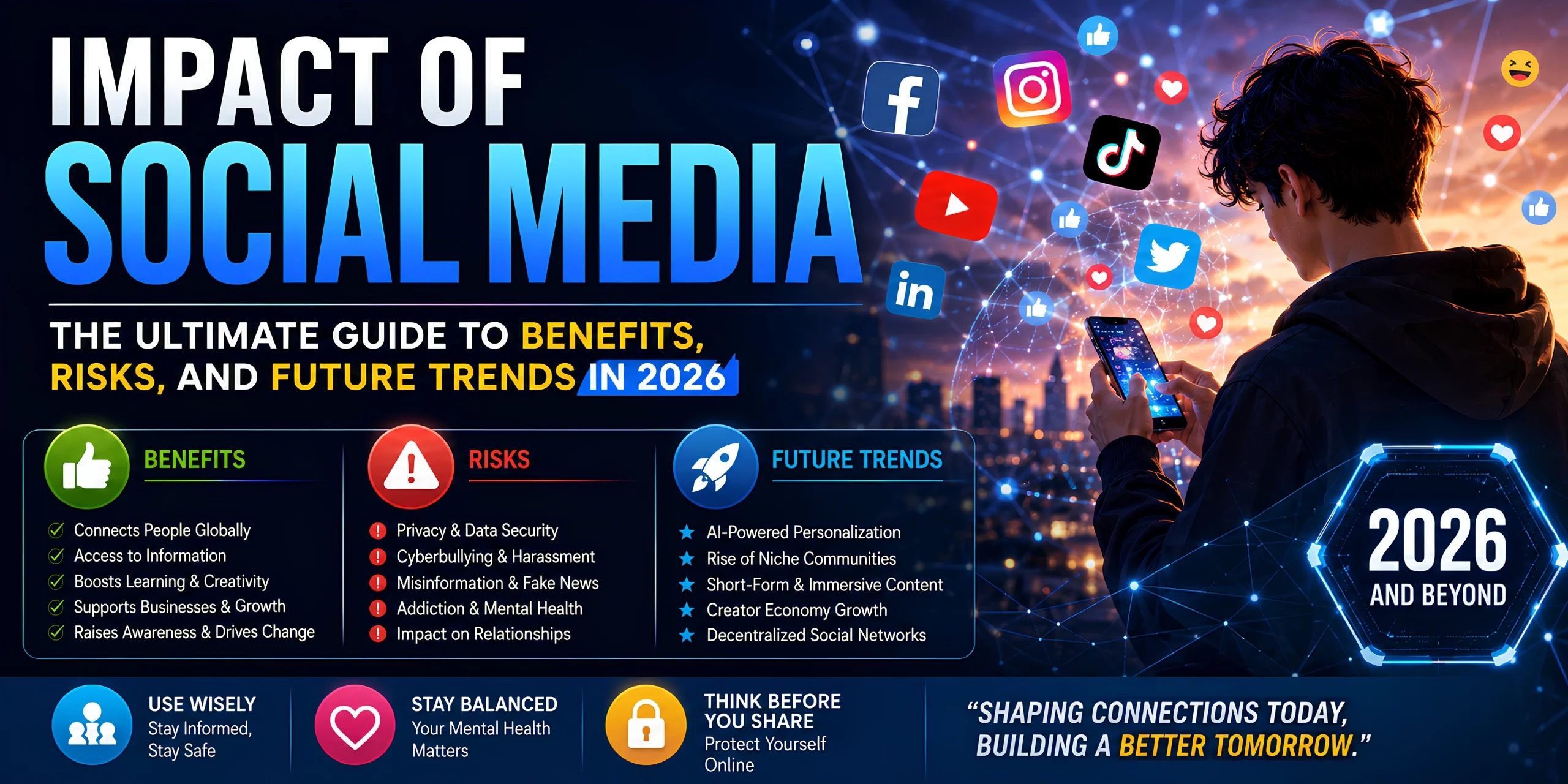
You probably use social media every day to chat with friends, watch videos, follow trends, or discover new content. However, many people still underestimate how deeply social media influences mental health, communication, education, businesses, and society itself. In this guide, you’ll discover the real impact of social media, including its positive effects, negative consequences, practical examples, and strategies for responsible use.
Key Takeaways
- Social media has transformed communication by enabling instant global connectivity and information sharing.
- Businesses use social media platforms to increase brand awareness, engage audiences, and drive sales.
- Mental health concerns linked to excessive social media use include anxiety, stress, addiction, and reduced productivity.
- Educational communities use social media for collaboration, online learning, and professional networking.
- Privacy risks and misinformation remain major challenges associated with modern social platforms.
- Responsible social media usage involves managing screen time, protecting personal data, and verifying information sources.
- Future social platforms will increasingly rely on AI, immersive virtual experiences, and stricter privacy regulations.
What Is the Impact of Social Media?
The impact of social media refers to how social platforms influence communication, behavior, education, businesses, mental health, and society as a whole.
Social media is a digital communication system that allows users to create, share, and interact with content online. Platforms such as Facebook, Instagram, TikTok, and LinkedIn have changed how people communicate globally.
First, social media enables instant interaction between users regardless of geographic location. For example, students can attend virtual study groups while businesses can communicate with customers in real time.
Second, social media impacts society by influencing communication, education, marketing, entertainment, and public opinion. According to DataReportal, more than 5 billion people worldwide use social media platforms regularly — Source: DataReportal, 2025.
Moreover, social media affects how people consume information and form opinions. For example, trending posts and viral videos can shape political discussions, consumer behavior, and cultural movements within hours.

Why Does the Impact of Social Media Matter?
The impact of social media matters because social platforms influence nearly every aspect of modern digital life.
Today, social media affects communication, business growth, education, relationships, entertainment, and even political discussions. According to Statista, global social media advertising spending is projected to exceed $276 billion — Source: Statista, 2025.
How Social Media Changed Communication
Social media changed communication by making information sharing faster, easier, and more interactive.
Previously, communication relied heavily on phone calls, television, newspapers, and email. Today, people can share videos, opinions, and live updates instantly through social platforms.
For example, families separated across countries can maintain daily contact through messaging apps and video-sharing platforms.
Why Businesses Depend on Social Media
Businesses depend on social media because it provides direct access to targeted audiences.
Companies use platforms like YouTube and X to promote products, build communities, and increase customer engagement.
For example, small businesses often grow rapidly using low-cost digital campaigns instead of expensive traditional advertising.
“digital marketing beginner guide“
Why Social Media Shapes Modern Society
Social media shapes modern society by influencing trends, conversations, and public awareness.
At the same time, social platforms amplify social activism and online communities. For example, environmental campaigns and mental health awareness movements often gain global visibility through viral content.
What Are the Positive Effects of Social Media?
The positive effects of social media include better communication, educational access, business growth, community building, and creative expression.
Although social media has risks, it also provides many benefits when used responsibly.
Improved Global Communication
Social media improves communication by enabling instant interaction between people worldwide.
Users can share messages, photos, videos, and live updates within seconds. For example, professionals collaborate across countries using online communities and networking groups.
According to Pew Research Center, most teenagers and young adults use social media daily to stay connected with peers — Source: Pew Research Center, 2025.
Educational Opportunities and Online Learning
Social media supports education by making knowledge and learning resources more accessible.
Teachers, universities, and industry experts regularly share tutorials, webinars, and educational content online.
For example, students often use educational communities on platforms like Reddit and Discord to exchange study materials and advice.

Business Growth and Digital Marketing
Social media marketing allows businesses to reach targeted audiences through content, advertising, and community engagement.
Brands use content marketing, influencer collaborations, and video campaigns to increase visibility.
For example, many startups generate significant traffic through short-form video marketing on TikTok and Instagram Reels.
“social media marketing strategies”
“SEO and content marketing tips“
Community Building and Social Activism
Social media helps communities organize around shared interests and social causes.
Online movements frequently raise awareness about social, environmental, and humanitarian issues.
For example, fundraising campaigns and awareness initiatives often gain millions of interactions globally through hashtags and viral posts.
What Are the Negative Effects of Social Media?
The negative effects of social media include addiction, anxiety, cyberbullying, misinformation, productivity loss, and privacy concerns.
While social platforms offer benefits, excessive or unhealthy usage can create serious challenges.
How Does Social Media Affect Mental Health?
Excessive social media usage is associated with anxiety, depression, and reduced productivity in many users.
Studies suggest that constant comparison, online validation pressure, and information overload may contribute to emotional stress. According to the American Psychological Association, heavy social media use can negatively affect sleep quality and emotional well-being — Source: APA, 2025.
For example, users may experience low self-esteem after repeatedly comparing themselves to unrealistic online lifestyles.
“mental health awareness resources“
Social Media Addiction and Productivity Loss
Social media addiction reduces productivity by encouraging constant distractions and excessive screen time.
Many users spend hours scrolling through feeds without realizing how much time has passed.
For example, students often struggle to focus on academic tasks because of notifications and entertainment content.
”best productivity tools for students“
Cyberbullying and Online Harassment
Cyberbullying refers to online harassment, intimidation, or abuse through digital platforms.
Unfortunately, social media sometimes enables anonymous harassment and toxic behavior.
For example, teenagers and public figures frequently face targeted attacks through comments, fake accounts, and viral rumors.
Misinformation and Fake News
Social media accelerates the spread of misinformation because content can go viral before verification.
False information about health, politics, or current events often spreads rapidly online.
For example, manipulated videos and misleading headlines frequently influence public opinion during elections or major global events.
Privacy and Security Risks
Social media privacy risks involve data collection, identity exposure, and cybersecurity threats.
Many platforms collect user activity data for advertising and personalization purposes.
For example, phishing scams and hacked accounts remain common security concerns across multiple social networks.
“how to protect online privacy“

How Does Social Media Affect Businesses and Careers?
Social media affects businesses and careers by creating marketing opportunities, professional networking channels, and digital job markets.
Today, companies rely heavily on social platforms for customer engagement and brand visibility.
Brand Awareness and Audience Engagement
Social media increases brand awareness by helping businesses reach large online audiences quickly.
Companies publish videos, tutorials, reviews, and interactive campaigns to attract customers.
For example, viral marketing campaigns often generate millions of views within days.
Influencer Marketing Opportunities
Influencer marketing uses social media personalities to promote products and services.
Brands collaborate with influencers because audiences often trust creators more than traditional advertisements.
According to Influencer Marketing Hub, influencer marketing continues to produce strong returns for businesses worldwide — Source: Influencer Marketing Hub, 2025.
“how influencer marketing works“
Career Opportunities in Digital Marketing
Social media created new career paths in content creation, digital marketing, and online branding.
Today, businesses hire social media managers, video editors, content strategists, and online community specialists.
For example, freelancers often build full-time careers through content creation on YouTube or Instagram.
“career opportunities in digital marketing“
What Are Real-World Examples of Social Media Impact?
Real-world examples of social media impact demonstrate how online platforms influence politics, education, marketing, and public awareness.
Several major events highlight both the positive and negative effects of social platforms.
| Example | Impact | Outcome |
| Facebook-Cambridge Analytica scandal | Data privacy concerns | Increased regulation discussions |
| Viral fundraising campaigns | Community support | Millions raised for charities |
| Educational creator communities | Online learning access | Wider knowledge sharing |
| Influencer marketing campaigns | Brand visibility | Increased sales and engagement |
| Social activism movements | Public awareness | Global participation and advocacy |
Facebook-Cambridge Analytica Scandal
The Cambridge Analytica scandal exposed how social media data could influence political advertising and public opinion.
The controversy raised global concerns about user privacy and data misuse.
For example, millions of user profiles were reportedly accessed without proper consent.
Social Activism Campaigns
Social activism campaigns use social media to spread awareness and organize movements.
Hashtag campaigns frequently mobilize users around social causes.
For example, online campaigns related to climate awareness and humanitarian aid often receive worldwide support.
Educational Communities and Online Learning
Educational social communities help learners access tutorials, discussions, and collaborative resources.
Students increasingly use online groups for peer learning and mentorship opportunities.

What Tools and Strategies Help Responsible Social Media Use?
Responsible social media usage involves protecting personal privacy, limiting screen time, and verifying information before sharing it.
Healthy digital habits can reduce many negative effects associated with social platforms.
Screen Time Management Tools
Screen time management tools help users control excessive social media usage.
Apps such as digital wellbeing trackers and focus timers encourage healthier habits.
For example, smartphone screen-time dashboards allow users to monitor daily app usage.
Privacy and Cybersecurity Practices
Privacy protection strategies reduce the risk of scams, hacking, and data misuse.
Users should regularly update passwords and review account permissions.
For example, enabling two-factor authentication improves account security significantly.
Healthy Social Media Habits
Healthy social media habits improve mental well-being and productivity.
Users should follow educational accounts, limit toxic content, and schedule breaks from social platforms.
For example, reducing late-night scrolling can improve sleep quality and concentration.
Digital Detox Strategies
Digital detox strategies involve temporarily reducing social media use to improve focus and emotional balance.
Many users take weekend breaks or disable notifications to reduce distractions.

What Are the Future Trends Shaping Social Media Platforms?
Future social media trends include AI-driven platforms, immersive virtual experiences, creator economies, and stronger privacy regulations.
Technology continues transforming how users interact online.
AI-Driven Social Platforms
Artificial intelligence is becoming central to content recommendations and digital engagement.
AI systems personalize feeds, automate moderation, and improve advertising targeting.
For example, recommendation algorithms influence what users watch, purchase, and discuss online.
Virtual Communities and the Metaverse
Virtual social environments aim to create immersive digital experiences beyond traditional feeds.
Companies are investing heavily in virtual reality and interactive online spaces.
For example, virtual events and digital avatars are becoming increasingly popular in entertainment and gaming communities.
Increased Focus on Privacy and Regulation
Governments and technology companies are strengthening privacy policies and platform regulations.
Data transparency and user safety will likely become even more important in the future.
“top social media trends in 2026“
What Should You Do Next After Understanding the Impact of Social Media?
The best next step is developing healthier and more intentional social media habits.
First, evaluate how much time you spend on social platforms daily. Second, follow educational and productive communities instead of purely distracting content.
Moreover, businesses should focus on building authentic audience engagement instead of chasing vanity metrics.
For example, creators who prioritize value-driven content often build stronger long-term communities.
“content creation tips for beginners“
Conclusion
The impact of social media is both powerful and complex because it influences communication, education, businesses, entertainment, and mental health simultaneously.
On one hand, social platforms create opportunities for learning, networking, creativity, and business growth. On the other hand, excessive usage can contribute to anxiety, misinformation, cyberbullying, and privacy concerns.
Ultimately, responsible social media usage requires balance, awareness, and healthy digital habits. By understanding both the positive and negative effects of social media, you can use these platforms more effectively while protecting your well-being and privacy in the evolving digital world.
FAQs
What is the impact of social media on society?
Social media impacts society by influencing communication, education, marketing, entertainment, and public opinion. It shapes trends, spreads information quickly, and connects communities globally.
How does social media affect mental health?
Social media can affect mental health positively or negatively depending on usage patterns. Excessive use may contribute to stress, anxiety, depression, and low self-esteem.
What are the positive effects of social media?
Positive effects of social media include global communication, educational access, business growth, and community building. Many users also benefit from networking and creative opportunities.
What are the negative effects of social media?
Negative effects of social media include addiction, cyberbullying, misinformation, privacy risks, and productivity loss. Unhealthy usage habits can also affect emotional well-being.
Why is social media important for businesses?
Social media is important for businesses because it helps brands reach audiences, build communities, and promote products cost-effectively. Many companies use social platforms for advertising and customer support.
How can people use social media responsibly?
Responsible social media use involves limiting screen time, protecting personal information, and verifying online content before sharing it. Healthy usage habits improve both productivity and mental well-being.